Applications by Sector
Cooling for Flexography and Rotogravure
Chillers and temperature controllers for high-quality graphic printing
Precision cooling and thermal control systems for CI (central drum) flexographic, stack, rotogravure and offset printing machines. Cylinder temperature from 18°C to 25°C with ±0.5°C precision, essential for print quality, perfect color registration and maximum productivity. Solutions for printing on plastic films, paper, cardboard, aluminum and special substrates. Flow from 20 to 500 L/min with pressure from 2 to 8 bar.
Talk to SpecialistTechnical Specifications
Process Requirements
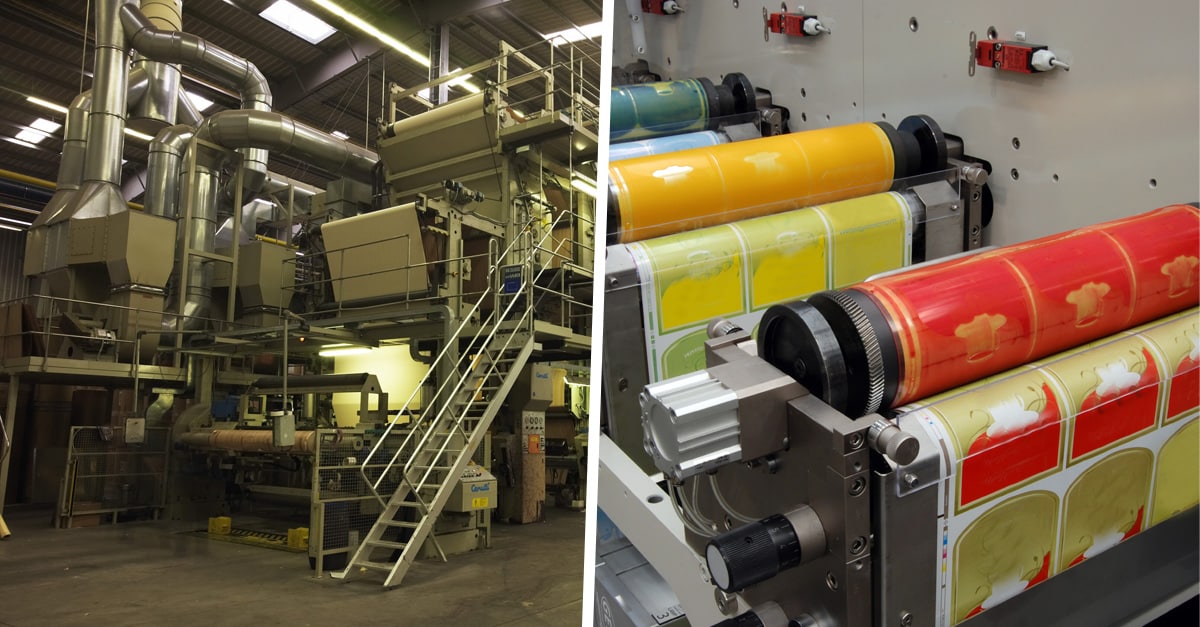
The central impression drum is the heart of CI flexographic machines. Its precise thermal control ensures substrate dimensional stability during printing, resulting in perfect registration between 8, 10 or 12 colors. Variations of just 1°C can cause registration shift up to 0.1mm.
Anilox rollers transfer ink to the printing plates. Temperature directly affects ink viscosity and consequently the volume of ink transferred. Precise control ensures uniform color density throughout the entire roll.
Cylinders where printing plates are mounted. Thermal control prevents differential expansion between cylinder and plate, preventing distortions in the printed image.
Chrome-plated cylinders engraved with the image. Temperature affects ink transfer from engraved cells to the substrate. Precise control is essential for faithful reproduction of halftones and gradients.
Water-based inks require temperature control to maintain stable viscosity. Too low temperature increases viscosity and hinders transfer; too high accelerates drying and causes clogging.
Solvent-based inks are sensitive to temperature which affects solvent evaporation rate. Proper control prevents premature drying and ink skinning issues.
UV or electron beam curable inks require controlled temperature for proper viscosity. UV curing systems generate significant heat that must be dissipated.
Ink drying between print stations. Controlled temperature and airflow for uniform solvent evaporation without damaging the substrate.
Refrigerated rolls after drying units to cool the substrate before the next print station. Essential to prevent blocking and adhesion issues.
Film lamination process with hot-melt adhesive. Precise lamination roll temperature ensures uniform adhesion without damaging the substrate.
Lamination with solvent-based or water-based adhesives. Temperature control of environment and rolls for proper adhesive curing.
Print environment climate control for relative humidity control. Inadequate humidity causes static electricity on the substrate, registration problems and print defects.
Technical Analysis
The Science of Flexographic Printing and the Role of Temperature
Flexography is a rotary printing process that uses flexible printing plates (photopolymers) and low-viscosity inks. It is the dominant process for printing flexible packaging, labels, wrapping papers, and corrugated cardboard boxes. The quality of flexographic printing critically depends on thermal control at multiple points in the process.
Impact of Temperature on Print Quality
Temperature affects virtually all aspects of the flexographic process:
| Parameter | Effect of High Temperature | Effect of Low Temperature |
|---|---|---|
| Ink Viscosity | Reduces viscosity, excess ink | Increases viscosity, lack of ink |
| Color Registration | Substrate expansion, misregistration | Contraction, opposite misregistration |
| Drying | Fast drying, clogging | Slow drying, blocking |
| Dot Quality | Excessive dot gain | Missed dots, open areas |
| Adhesion | Can impair anchorage | Inadequate adhesion |
CI vs. Stack Flexographic Machines
There are two main types of flexographic machines, each with specific thermal requirements:
- CI (Central Impression) Machines: Use a single large-diameter central cylinder (drum) around which the printing stations are positioned. Thermal control of the drum is critical because all colors are printed on the same cylinder. Typical cooling capacity: 30-100 kW.
- Stack Machines: Vertically stacked printing stations, each with its own printing cylinder. Require individual control of each station. Typical capacity: 5-15 kW per station.
Rotogravure: Maximum Precision
Rotogravure uses engraved metal cylinders. It is the highest quality process for packaging printing, especially for reproducing photographs and gradients. Chromed cylinders are extremely sensitive to temperature:
- 1°C variation causes expansion of ~11 μm/m in the steel cylinder
- Directly affects the volume of engraved cells
- Impacts ink transfer and color density
- Control of ±0.3°C is ideal for high-quality work
Sizing of Refrigeration Systems
The calculation of refrigeration capacity for printing machines considers:
- Heat generated by friction: Contact between cylinders, printing plates, and substrate
- Drying heat: Hot air from drying tunnels transferred to the substrate
- Machine speed: Higher speed = greater heat generation
- Printing width: Wider machines require greater capacity
Practical rule: 1-2 kW of refrigeration per meter of printing width per color station.
Humidity Control in Printing
The relative humidity of the printing environment affects:
- Static electricity: Low humidity (<40% RH) increases static charges on the substrate, causing feeding problems and dust adhesion
- Dimensional stability: Paper and cardboard absorb/release moisture, changing dimensions
- Ink drying: High humidity slows down the drying of water-based inks
- Operator comfort: Controlled environment improves productivity
Sector Challenges
Print cylinders need temperature controlled with ±0.5°C precision to maintain correct ink viscosity and dimensional stability. Variations cause registration, color density and dot quality issues.
Modern machines operate at 400-600 m/min. At these speeds, minimal thermal variations cause visible misregistration between colors. The cooling system must respond quickly to load changes.
A flexographic machine can have 10+ zones with different temperatures: central drum, anilox, inks, drying, chill rolls, lamination. Each zone requires independent control.
Different substrates (BOPP, PET, PE, paper, aluminum) have different expansion coefficients. The system must allow quick temperature adjustments for each material.
Water-based, solvent-based and UV inks have distinct thermal requirements. Systems must be versatile to handle different formulations.
Cooling and drying systems represent a significant portion of energy consumption. Optimization is essential for competitiveness and sustainability.
Graphic industries frequently operate continuously. The cooling system must maintain consistent performance without interruptions.
Production environment temperature and humidity control to prevent static electricity, condensation and substrate dimensional variations.
Our Solutions
Dedicated cooling for print cylinders with ±0.5°C precision. Models from 5 to 50 kW with integrated pump and reservoir. Ideal for stack machines and dedicated applications.
View ProductPrecise temperature control for ink systems, anilox and plate cylinders. Heating and cooling in a single unit with fast response (<30 seconds).
View ProductCentralized system for multiple printing machines. Capacities from 50 to 500 kW with redundancy and superior energy efficiency. Ideal for printing parks.
View ProductWater temperature control for cylinder and plate washing systems. Proportional hot and cold water mixing for precise temperature.
View ProductProduction environment climate control for temperature and humidity. Prevents static electricity and substrate dimensional variations.
View ProductHumidity control in roll storage areas and production environment. Prevents condensation and static electricity issues.
View ProductClimate control for finishing, shipping and office areas. Comfortable environment for operators and temperature control for materials.
View ProductCustom projects for specific printing lines, including rotogravure, offset and large format digital printing.
View ProductRegulations and Standards
Benefits for Your Business
Success Case
Flexible Packaging Industry - Campinas/SP
Complete cooling system modernization for printing park with 6 CI flexographic machines of 8 and 10 colors, 2 rotogravure machines and 3 laminators. The project replaced a 15-year-old obsolete system with a centralized solution featuring high-efficiency chillers, individual temperature controllers for each machine and integrated monitoring system. Installation was carried out in phases to minimize production impact.
Related Applications
Explore other applications for Applications by Sector
Ready to optimize your process?
Our engineering team is ready to develop the ideal solution for your application.